
"mosquito repellent incense"
3100 article(s) found

Introduction to the characteristic boutique coffee in Dominica coffee flavor manor with smooth taste
In the early 17th century, when French, Dutch, and British pirates were operating in the western part of Hispaniola, France began to allow farmers and merchants to gradually colonize the western part of the Spanish island, blocked by the island's mountains. Without attracting the attention of the Spaniards in the east, L'Or é al arrived in Santo Domingo in 1801. He abolished slavery on behalf of the French government. In 1802, Napoleon sent

Where did decaf come from?
Caffeine is a xanthine alkaloid, a central nervous system stimulant that temporarily repels drowsiness and restores energy. Caffeinated coffee, tea, soft drinks and energy drinks sell very well, so caffeine is also the most commonly used psychotropic drug in the world. In North America, 90% of adults use caffeine every day. Many natural sources of caffeine also contain

The flavor and taste of Dominica coffee with pure and soft aroma introduce the characteristics of fine coffee in the manor area.
At the beginning of the 17th century, when French, Dutch and British pirates were operating in the west of Hispaniola, France began to allow farmers and merchants to gradually colonize the western part of the Spanish island, which was blocked by mountains on the island. It didn't attract the attention of the Spaniards in the east. [3] in 1677, about 4,000 French lived in 11 villages in the west of the island. In 1697, France and

Introduction to the characteristics of Dominican Santo Domingo Coffee Flavor Manor
In 1795, France and Spain signed the Basel Peace Treaty in Switzerland, agreeing to cede the Santo Domingo area in the eastern part of the island of Dominica to France, making the Spanish island a complete French colony. Six years later, Toussaint Lovidur, a black Haitian, led other black slaves to revolt against French rule and captured Santo Domingo in 1801.

Fresh and elegant Dominica Santo Domingo Coffee Flavor taste Manor characteristics of boutique coffee
In 1795, France and Spain signed the Basel Peace Treaty in Switzerland, agreeing to cede the Santo Domingo area in the eastern part of the island of Dominica to France, making the Spanish island a complete French colony. Six years later, Toussaint Lovidur, a black Haitian, led other black slaves to revolt against French rule and captured Santo Domingo in 1801.

Introduction to the characteristics of high-quality coffee beans with flavor and taste in Dominica coffee producing areas
In 1677, about 4,000 French lived in 11 villages in the west of the island. In 1697, France and Spain ceded the western part of the island to France according to the Leswick Treaty of the Alliance War, formally recognizing French sovereignty over Haiti in the western part of the Spanish island, and the eastern part of the Spanish island was called East Santo Domingo. France continues to develop its agricultural economy on the island of Hispaniola.
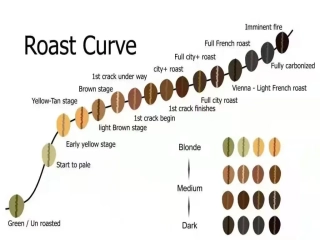
Roasted coffee beans turn yellow a burst point to judge the course coffee taste astringency is what is the reason for roasting?
As the title, Qianjie article is mainly for the psychological construction of friends who are about to step into coffee baking. In the first five lessons of "Coffee roasting from scratch", only a very basic roasting theory is explained. The degree of simplicity is probably the "ninety-nine multiplication table" in mathematics. We must have a clear understanding of a reality and theory.

The taste of Dominica Santo Domingo coffee is mellow with moderately bright sour taste.
In 1586, Captain Drake of England led a fleet to attack the city of Santo Domingo, but was repelled by Spanish troops stationed in Dominica. Between 1605 and 1606, towns on the west coast of Hispaniola were often plundered by pirates, causing most of the local population to move inland. [3] at the beginning of the 17th century, French, Dutch and British pirates lived in the west of Hispaniola

An introduction to fine coffee beans in the manor with a winding, smooth and smooth Dominican coffee flavor.
In 1677, about 4,000 French lived in 11 villages in the west of the island. In 1697, France and Spain ceded the western part of the island to France according to the Leswick Treaty of the Alliance War, formally recognizing French sovereignty over Haiti in the western part of the Spanish island, and the eastern part of the Spanish island was called East Santo Domingo. France continues to develop its agricultural economy on the island of Hispaniola.

Flavor and taste characteristics of Dominica Santo Domingo Coffee Manor with a winding and smooth aftertaste
In 1795, France and Spain signed the Basel Peace Treaty in Switzerland, agreeing to cede the Santo Domingo area in the eastern part of the island of Dominica to France, making the Spanish island a complete French colony. Six years later, Toussaint Lovidur, a black Haitian, led other black slaves to revolt against French rule and captured Santo Domingo in 1801.

Starbucks prices have gone up! Regular drinks have gone up by 1 yuan! Father Xing finally couldn't help raising the price.
Today, Starbucks fans found that Starbucks' regular drinks, starting today, are up! Yes! one! Block! money! The price of Starbucks in the United States has been raised since February this year, and Starbucks has always regarded the Chinese market as the second local market. China's Starbucks can't resist the price increase this time. Why? The price increase of Starbucks in recent years is

Flavor description of Dominican coffee with mellow taste introduction to the characteristics of the taste of grinding degree
In 1677, about 4,000 French lived in 11 villages in the west of the island. In 1697, France and Spain ceded the western part of the island to France according to the Leswick Treaty of the Alliance War, formally recognizing French sovereignty over Haiti in the western part of the Spanish island, and the eastern part of the Spanish island was called East Santo Domingo. France continues to develop its agricultural economy on the island of Hispaniola.

Introduction of Dominica boutique coffee with full grains and excellent acidity
In 1677, about 4,000 French lived in 11 villages in the west of the island. In 1697, France and Spain ceded the western part of the island to France according to the Leswick Treaty of the Alliance War, formally recognizing French sovereignty over Haiti in the western part of the Spanish island, and the eastern part of the Spanish island was called East Santo Domingo. France continues to develop its agricultural economy on the island of Hispaniola.

Description of Dominica Coffee Flavor with mellow taste A brief introduction to the characteristics of the varieties of Grinding degree
In 1677, about 4,000 French lived in 11 villages in the west of the island. In 1697, France and Spain ceded the western part of the island to France according to the Leswick Treaty of the Alliance War, formally recognizing French sovereignty over Haiti in the western part of the Spanish island, and the eastern part of the Spanish island was called East Santo Domingo. France continues to develop its agricultural economy on the island of Hispaniola.

Introduction of Flavor characteristics of Fine Coffee beans in Dominica Santo Domingo Coffee Variety producing area
In 1677, about 4,000 French lived in 11 villages in the west of the island. In 1697, France and Spain ceded the western part of the island to France according to the Leswick Treaty of the Alliance War, formally recognizing French sovereignty over Haiti in the western part of the Spanish island, and the eastern part of the Spanish island was called East Santo Domingo. France continues to develop its agricultural economy on the island of Hispaniola.

Introduction to the characteristics of Dominica Coffee Flavor and taste Manor
In 1677, about 4,000 French lived in 11 villages in the west of the island. In 1697, France and Spain ceded the western part of the island to France according to the Leswick Treaty of the Alliance War, formally recognizing French sovereignty over Haiti in the western part of the Spanish island, and the eastern part of the Spanish island was called East Santo Domingo. France continues to develop its agricultural economy on the island of Hispaniola.

Dominic Coffee with pleasant Flavor Flavor and Taste introduction to Fine Coffee in Manor area
In 1795, France and Spain signed the Basel Peace Treaty in Switzerland, agreeing to cede the Santo Domingo area in the eastern part of the Spanish island to France, making the Spanish island a complete French colony. Six years later, Toussaint Lovidur, a black Haitian, led other black slaves to revolt against French rule, and in 1801 captured Santo Domingo, which had just ruled France, thus unifying the whole West.

Introduction to the characteristics of boutique coffee beans in Dominica Santo Domingo coffee producing area
On July 16, 1838, Juan Pablo Duvat and his colleagues established Trinity one experience (La Trinitaria), a Dominican secret society, with the aim of gaining independence from the rule of Haiti. Soon after, Matthias Ramon Malia and Francesco del Rosario Sanchez joined the Trinity experience. All three of them were later called duo.

[evaluation] what is the difference in the taste of sunburn and water-washed Sakuran? Which tastes better?
The exchange of professional baristas please follow the coffee workshop (Wechat official account cafe_style) in March this year, in the China Regional Brewing Competition held in Shanghai, there was a bean from Africa and Ethiopia, which shook one expensive pedigree after another in the posture of a common people, and repelled one by one, and finally lost only narrowly to the champion's Finca Deborah Rose Summer (last year).

An introduction to the characteristics of the fresh, elegant and full-grained coffee flavor manor in Santo Domingo, Dominica.
At the beginning of the 17th century, when French, Dutch and British pirates were operating in the west of Hispaniola, France began to allow farmers and merchants to gradually colonize the western part of the Spanish island, which was blocked by mountains on the island. It didn't attract the attention of the Spaniards in the east. [3] in 1677, about 4,000 French lived in 11 villages in the west of the island. In 1697, France and